
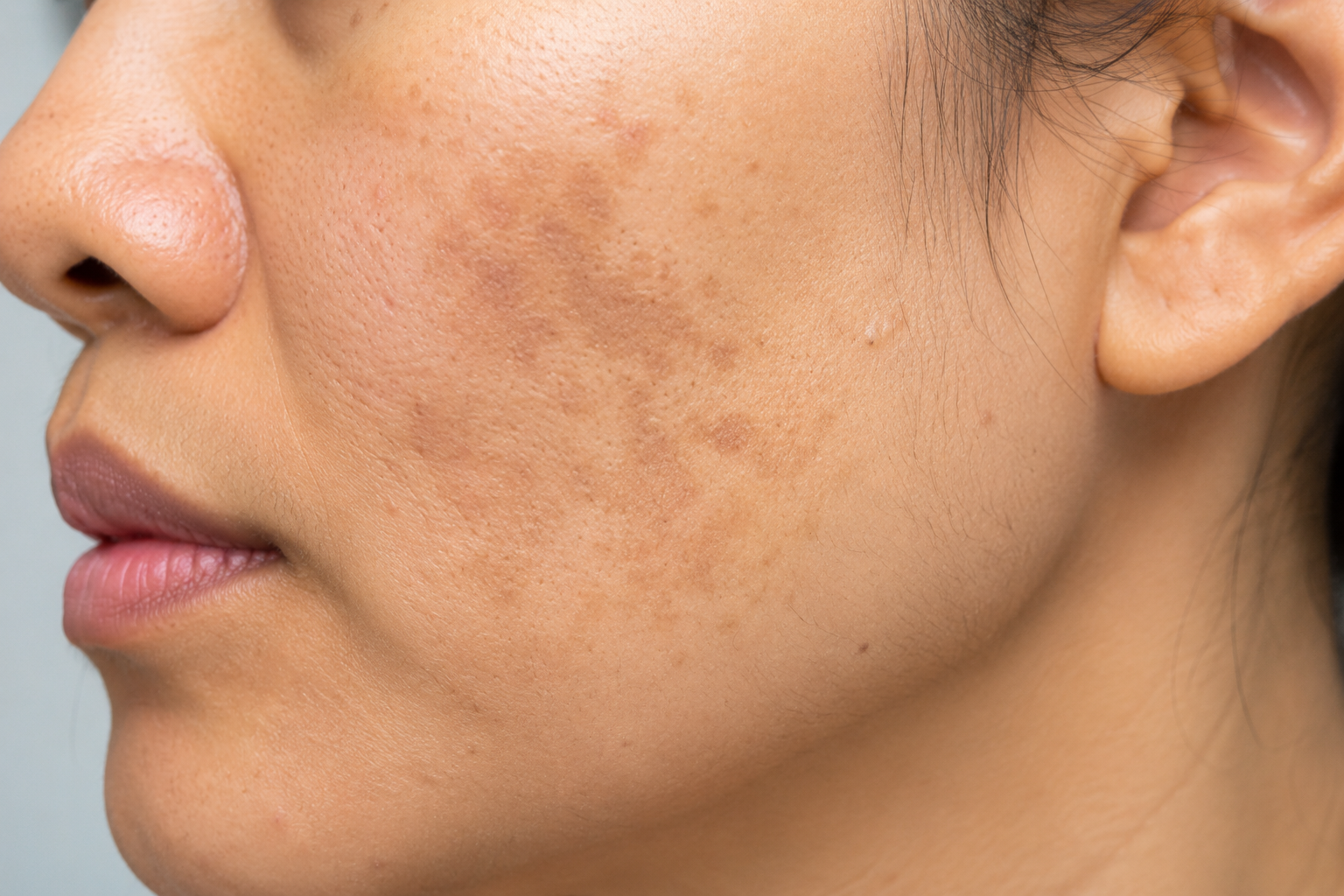
When should you see a dermatologist?
If acne is painful, persistent or leaving scars, if pigmentation keeps returning, or if you have recurring itching, scaling, redness or rashes, professional assessment can help identify the underlying cause.
Why diagnosis matters
Different skin conditions can look similar but need very different treatments. A dermatologist may assess your skin history, examine the affected area and recommend appropriate medical skincare, medicines, peels, lasers or other procedures when suitable.
Common signs that should not be ignored
- Persistent or painful acne and acne scarring.
- Dark patches or pigmentation that repeatedly returns.
- Recurring rashes, itching or scaling.
- A mole or skin lesion that changes in size, colour or appearance.
Acne and pigmentation: what patients should know
Acne and pigmentation often occur together, but they are not the same problem. Active acne needs to be controlled to reduce new inflammation, while post-acne pigmentation is managed by addressing inflammation, sun exposure and the skin’s tendency to produce excess pigment. Treatment should be selected according to your skin type, the severity of acne and whether there are marks or true acne scars.
For persistent acne, a dermatologist may consider prescription skincare, medicines or procedures such as chemical peels or laser-based treatments when appropriate. Results usually require consistency rather than frequent switching between products.
Aura Cutisurg Clinic provides doctor-led dermatology consultations for patients in Malleshwaram and nearby Bengaluru areas.
Frequently Asked Questions About Acne, Pigmentation and Skin Problems
1. When should I see a dermatologist for acne?
See a dermatologist when acne is painful, persistent, worsening, leaving dark marks or scars, or not improving with basic skincare. Early assessment can help prevent ongoing inflammation and reduce the risk of scarring.
2. How can I reduce acne and pigmentation?
The right approach depends on the cause and your skin type. Treatment may include dermatologist-recommended skincare, prescription medicines, sunscreen and selected procedures for pigmentation or acne scars.
3. What is the difference between acne marks and acne scars?
Acne marks are usually changes in skin colour after inflammation, while acne scars are structural changes such as depressions or raised areas. They require different treatment approaches.
4. Can pigmentation come back after treatment?
Yes. Pigmentation can return when the underlying trigger, sun exposure or active acne is not controlled. Consistent sun protection and maintenance skincare are important after treatment.
5. Is chemical peel treatment good for acne and pigmentation?
Chemical peels can be useful for selected cases of acne, post-acne marks and uneven skin tone, but the type and strength should be chosen by a qualified professional.
6. Why is my skin pigmentation not going away?
Persistent pigmentation may be related to ongoing acne, sun exposure, hormonal factors or the wrong skincare routine. A dermatologist can help identify the pattern and choose an appropriate treatment plan.
7. Can a dermatologist treat recurring rashes and itching?
Yes. Recurring itching, redness, scaling or rashes can have different causes, so diagnosis is important before choosing treatment.
8. Should I worry about a changing mole or skin lesion?
A mole or skin lesion that changes in size, shape, colour or appearance should be assessed by a dermatologist, particularly when the change is new or progressive.
9. How long does acne treatment take to show results?
Timelines vary by the type and severity of acne and the treatment used. Improvement is usually gradual, so following the recommended plan consistently is important.
10. How do I choose the best dermatologist in Malleshwaram?
Look for a qualified dermatologist who evaluates the underlying concern, explains treatment options and risks, sets realistic expectations and provides appropriate follow-up rather than recommending the same procedure to everyone.